

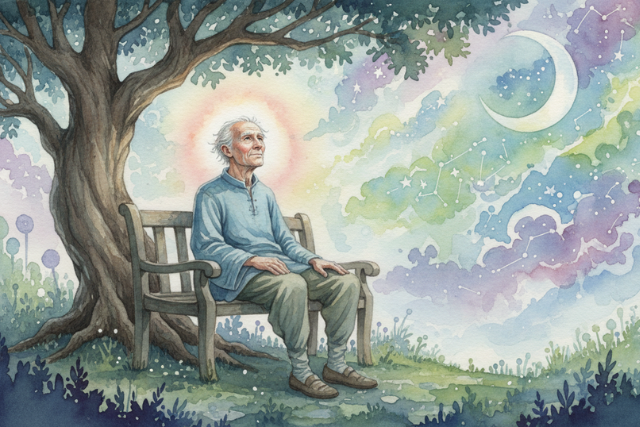

The notion of ‘staying present’ takes on profound significance when life unfolds in ways far removed from our initial expectations. Drawing from ancient wisdom attributed to the Buddha, ‘To live without arriving is to learn how to stay,’ this perspective invites us to explore what it truly means to persist in the midst of uncertainty.
Throughout much of my existence, I held a firm conviction that reaching a definitive ‘arrival’ was the ultimate goal. Similar to countless others, I anticipated that maturity would bring a distinct purpose, a level of stability, and a profound sense of integration into the world where I could declare, ‘This is my place. This defines my identity.’ I was confident that by exerting genuine effort, pursuing my genuine passions, and adhering steadfastly to my principles, that pivotal moment of fulfillment would inevitably manifest.
However, in the later chapters of my life, I confront the stark reality that such an arrival may never materialize. I recognize that I am far from unique in this realization, despite how infrequently we voice it openly. A vast number of individuals harbor a silent assumption that perseverance and dedication will culminate in a tangible, structured outcome-one that feels secure, understandable, and duly acknowledged. When reality diverges from this path, we often retreat into self-reflection, questioning whether we overlooked key elements or misinterpreted the fundamental guidelines of existence.
What I now comprehend as ‘staying’ entails maintaining a mindful presence devoid of that anticipated culmination. It involves committing to navigate a existence that refuses to conform to our preconceived narratives. This piece delves deeply into the sensations associated with such persistence and underscores the importance of articulating this shared human experience.
The Subtle Fear of Unresolved Belonging
There exists a trepidation I seldom acknowledge, even within the privacy of my own thoughts. It transcends mere anxiety over setbacks, the passage of time, or economic instability, although these elements hover nearby. At its core, it is the dread of embodying quiet embarrassment-not the sort that draws public attention or creates upheaval, but a subdued undercurrent that permeates personal relationships, remaining unarticulated yet palpably present.
Occasionally, I fret that my children perceive me as the individual who, perhaps too optimistically, suggested that circumstances would align seamlessly. That I would secure my niche in the world. That I would achieve that sense of arrival. I envisioned myself as a parent capable of gesturing toward a solid achievement and proclaiming, ‘This is my accomplishment. This is my destination.’
Yet, in truth, I often sense myself as one who has never fully anchored in this space.
Significant portions of my grown-up years transpired in realms distant from my roots-spanning different locations, traditions, and artistic pursuits. I engaged in labor, instructed others, crafted creations, and made meaningful contributions. Purpose infused my days. Nevertheless, these endeavors frequently operated beyond the established frameworks that grant societal validation. Upon attempting to integrate fully into the familiar cultural landscape of my return, a harsh truth emerged: I lacked the innate knowledge of how to fit seamlessly, and the environment seemed equally uncertain about accommodating me.
This awareness dawned gradually. It surfaced through endless job pursuits that yielded no fruit. Via courteous but firm dismissals. Amid the subtle unease of fielding the question, ‘What is your occupation?’ only to discover that my response no longer condensed neatly into a conventional reply.
The deepest disturbance for me lies not in the deviation from my envisioned path. Rather, it stems from the apprehension that this absence of arrival could cast a shadow on my family-that my children might feel compelled to justify my trajectory, subtly withdraw, or question the validity of the convictions their father once held dear.
This conviction-that authentic commitment, nurturing concern, and purposeful labor would inevitably yield protection and acclaim-was not a fabrication of my own making. It was bequeathed to me through generational narratives, and in turn, I conveyed it forward, banking on its enduring reliability.
Having accrued sufficient years, I now probe its historical veracity.
Aging and the Reckoning of Unfinished Stories
The process of growing older possesses an uncanny ability to intensify these inquiries. In youth, letdowns appear temporary, with ample opportunities ahead to shift directions, redefine oneself, and attain fulfillment at a later juncture. As time accumulates, however, the narrative arc constricts. We gain clarity not just on our accomplishments but also on the paths left unexplored and the identities we never assumed.
Nevertheless, I persist in this present moment. I continue pondering deeply. I strive for authenticity in my daily conduct. Each morning, I awaken within a reality that withheld the promised lucidity yet generously provided layers of profundity, duties, and genuine affection. Innumerable individuals arrive at this juncture soundlessly, lacking terminology to frame it, pondering their solitude in this introspective confrontation.
I do not regard myself as a figure of misfortune. Rather, I view myself as one who diverged from the prescribed storyline. One who conflated personal integrity with societal capital. One who presumed that labor rich in significance would inherently pave the way to acceptance and esteem.
From time to time, I stir awake in the darkness, struck by a sobering reflection: What if my grasp of worldly mechanics was fundamentally flawed? Not through grand misconception, but via the gradual unveiling that the principles guiding my choices do not invariably translate into safeguards or prestige.
This unease arises not from deceit but from profound discord-the chasm between proclaimed virtues and tangible recompenses. It also emerges from contemplations on how loved ones will perceive and navigate that disparity.
The Loneliness of Cultural Outsider Status
A distinctive solitude accompanies the sensation of estrangement within one’s native culture. It surpasses outright banishment, manifesting instead as a persistent awareness that prevailing dialects of aspiration, assurance, and self-advancement never fully resonated within me. Much of my journey has involved attentive observation over bold proclamation, prioritizing harmony with inner truths over relentless upward mobility.
This approach has bestowed profound purpose upon my life. Simultaneously, it has rendered me vulnerable to exposure.
Let me clarify my intent in sharing these reflections. I proffer neither remedies nor didactic insights. My aim is to illuminate a widespread yet hushed reality: the act of infusing one’s days with deliberate care and purpose, only to find oneself short of the anticipated destination. Articulating this phenomenon alleviates its isolating weight. Persistence becomes more bearable when recognized as a collective endeavor.
I could reframe this account as one of understated victory, polishing the contours to imply ultimate resolution. Such a portrayal, however, would evade the raw authenticity I seek to affirm. This narrative loops endlessly, mirroring the cyclical nature of many existences. No tidy conclusions emerge here. Far from a shortcoming, this openness embodies genuineness.
I remain uncertain of my children’s true perceptions. This anxiety may predominantly reside within my own mind. Yet it echoes broader societal tendencies: our ingrained linkage of value to prominence, triumph to authenticity, and devotion to quantifiable results.
I extended love abundantly. I provided unwavering focus. I delivered steadfast companionship. I imparted principles that resist encapsulation in professional summaries or financial blueprints. The adequacy of these offerings lies beyond my influence.
In contemporary observation, our societal discourse scantily equips those who mature sans accolades. No rituals honor understated impacts. Absent such validations, self-doubt creeps in relentlessly.
Buddhist Insights and the Practice of Non-Attachment
Teachings from Buddhism elucidate that attachment-to self-concepts, results, or narratives-fuels discontent. I grasp this on a cognitive level. On an affective plane, I yearn for my life’s coherence to register visibly to others. Releasing this longing demands not a singular epiphany but consistent, everyday discipline.
Certain days, I succeed in this release. On others, familiar apprehensions resurface-that I fell short of my projected evolution, that the closure I anticipated eludes me indefinitely.
Amid this tension, I cultivate an accompanying truth: Authenticity in living requires no final punctuation. Parental engagement thrives without destination. Significance endures sans assurances.
Arrival evaded me. It may forever. Yet I endured.
I remained devoted to cherished relationships. I upheld convictions central to my being. I committed to endeavors ringing true, irrespective of remuneration. I sustained my core self amid temptations toward resentment or superficial adaptation.
Existence absent culmination lacks tranquility. It humbles profoundly. Above all, it pulses with veracity.
If this exposition harbors intent, it resides herein: endurance holds intrinsic merit-amid ambiguity, unresolved arcs, and absent commendations.
In certain instances, persistence forges the essence of purpose itself.