


Immersing in Data for Strategic Insights
Over the past several months, I have dedicated considerable time to an activity I typically steer clear of: immersing myself deeply in raw data analysis. This was not about skimming through sensational headlines or absorbing varied opinions. Instead, it involved scrutinizing dull spreadsheets, official government statistics, detailed capital flow diagrams, currency fluctuation trends, asset correlation matrices, and comprehensive central bank balance sheet reports.
This type of information is the sort that most individuals rarely examine, and truthfully, it is the kind I usually hand off to specialized teams. However, this particular period stood out markedly from previous experiences.
For the very first time throughout my professional journey, the emerging patterns compelled me to undertake a profound reassessment of my business operations and personal financial safeguarding strategies.
I oversee an American-based enterprise that generates more than $100 million in annual revenue. After thorough deliberation, I arrived at an unexpected realization:
I can no longer justify maintaining such a heavy financial concentration within the United States.
The dynamics unfolding on the world stage are progressing at a velocity far exceeding common perceptions. This rapid pace means that without vigilant observation, your accumulated savings and investment portfolios could diminish substantially before you fully comprehend the underlying causes.
To address this, I developed a dedicated private resource titled The Great Rebalancing, initially crafted for a select group of trusted confidants, serving as a rigorous mechanism to validate my hypotheses.
I have now decided to make this available to a broader audience.
Please note that this constitutes not financial advice. Rather, it functions as a comprehensive atlas of critical indicators. These indicators are resounding, provided one understands precisely where to direct their focus.
Key Data Points That Prompted a Strategic Shift
To emphasize, these insights stem from empirical facts, not subjective viewpoints.
Consider the following currency-related indicators:
- The U.S. dollar experienced an 11% decline during the initial half of 2025, representing its most severe drop since 1973.
- Prominent financial institutions, such as Morgan Stanley, project an additional 10–20% depreciation extending into 2027.
Turning to global capital movement indicators:
- Foreign holdings in U.S. Treasuries have decreased from 50% to 33%.
- Central banks worldwide are acquiring gold at the most accelerated rate observed in contemporary history.
- Gold prices surged by 55% in 2025, surpassing the $4,000 per ounce threshold for the first time.
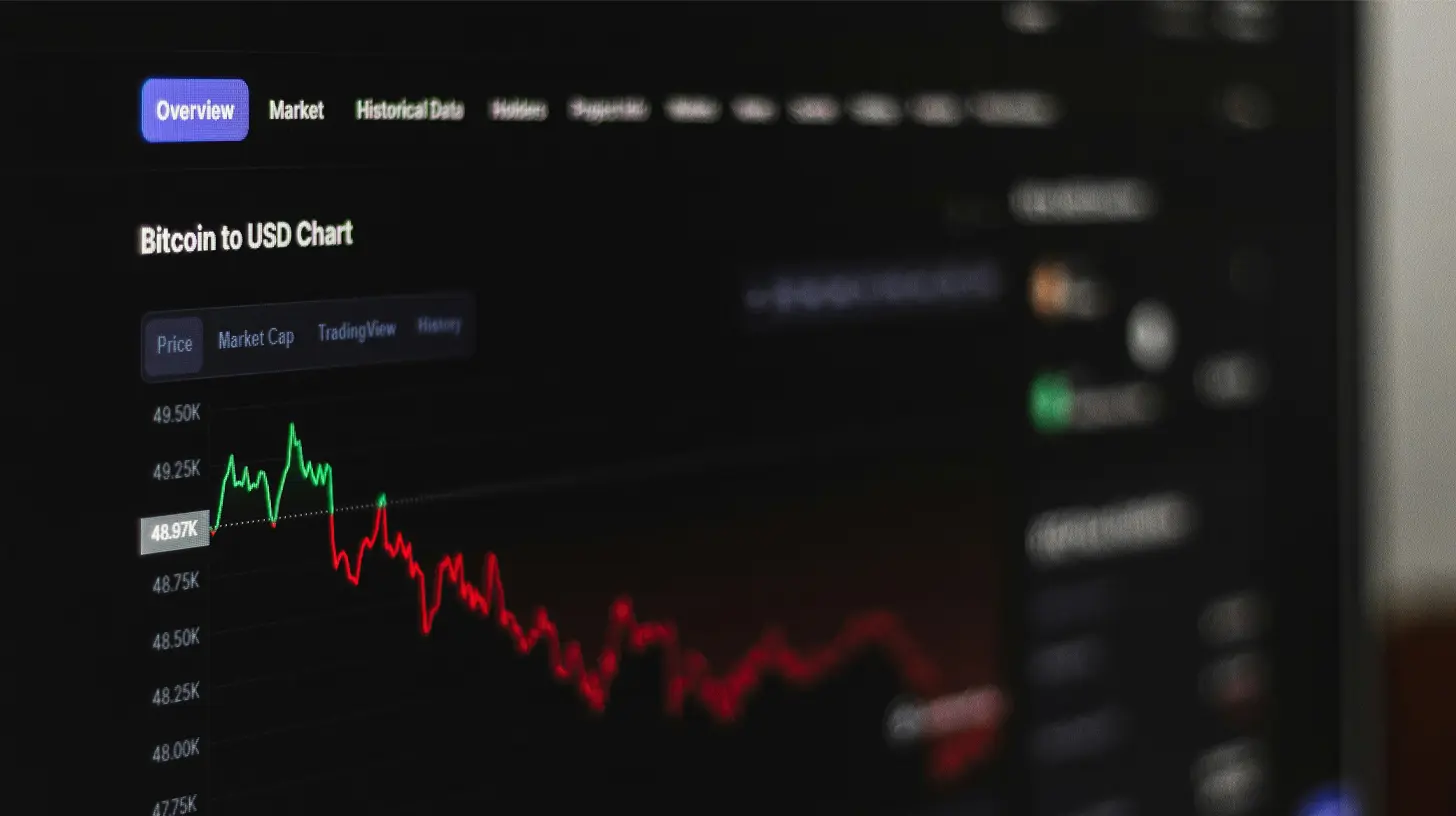
- In contrast, Bitcoin declined by 6.3% over the same timeframe, following a 23.5% plunge from its all-time high.
Regarding market performance indicators:
- Stocks from international markets surpassed the S&P 500 for the first instance in 15 years.
- The S&P 500 now derives 35% of its value from merely seven stocks – achieving the highest level of concentration ever documented.
Additional economic signals include decelerating hiring rates, gradually rising unemployment figures, and increasingly conservative approaches to capital expenditures.
These elements are not speculative narratives; they represent concrete signals. Collectively, they narrate a compelling tale:
The global economy is undergoing a significant rebalancing, shifting away from excessive U.S.-centric exposures.
Framing This as Risk Mitigation, Not Political Stance
It is essential to clarify my position unequivocally. This discussion transcends ideology. It has no bearing on personal affinity or aversion toward America, nor does it advocate an “anti” posture toward any entity.
Financial markets do not operate on punitive principles; they thrive on diversification strategies.
What manifests currently is a worldwide mechanism designed to buffer against heightened unpredictability.
Global capital flows react not to philosophical alignments but to fluctuations in stability. Any governing body implementing swift policy alterations introduces turbulence across trade relations, international partnerships, and market conditions.
Non-U.S. investors possess avenues to mitigate such uncertainties. In contrast, those centered in America face unmitigated vulnerability.
Within financial markets, a span of three years amid uncertainty equates to an extraordinarily protracted duration.
A frequent counterargument I encounter is: “This phase is fleeting; it will soon resolve.”
That outcome remains possible. Yet, enterprises frequently collapse within 12–24 months. Investment portfolios undergo transformative adjustments in mere months, rather than over extended decades. Decisions regarding capital deployment today yield compounding effects that persist lifelong.
Postponing action in anticipation of greater certainty does not equate to impartiality; it constitutes a speculative wager. History suggests this is seldom a prudent choice.
During such eras, the objective shifts from prophecy to cultivating optionality and adaptability.
The U.S. Dollar’s Role Beyond Mere Currency
The U.S. dollar transcends its function as simple currency; it embodies the foundational infrastructure of global trust.
Its efficacy relies on a collective global presumption encompassing:
- Gradual implementation of policy modifications
- Upholding commitments to alliances
- Avoidance of abrupt rule alterations
When this foundational trust erodes, capital does not flee in panic. Instead, it methodically redistributes itself.
This redistribution targets euros, gold reserves, assets in international domains, and jurisdictions renowned for their staid, dependable, and foreseeable characteristics.
Precisely this process is underway at present.
Should your entire savings, revenue streams, and asset holdings remain denominated exclusively in U.S. dollars out of habitual practice – “because it has always been thus” – you might inadvertently assume elevated risks beyond your awareness.
Observing Actions Over Verbal Declarations
A common pitfall involves prioritizing rhetorical statements over tangible behaviors.
Rebalancing trends invariably manifest through actions prior to their prominence in media coverage.
Therefore, prioritize monitoring behaviors:
- Numbers of international visitors are steadily decreasing.
- Enrollments from foreign students are on a downward trajectory.
- Capital investments are pivoting toward Europe and Asia.
- Central banks are amassing gold reserves with quiet determination and intensity, eschewing public announcements.
No formal boycott declarations have emerged. No orchestrated demonstrations have occurred.
These developments arise from millions of autonomous individual choices aligning toward a unified outcome.
This alignment itself constitutes the definitive signal.
Navigating Gold, Bitcoin, and Persistent Inquiries
A recurring question directed my way is:
“Is Bitcoin or gold the superior choice for investment?”
Here is my analytical framework:
- Gold appreciates amid waning confidence in leadership structures and institutional frameworks.
- Bitcoin appreciates when skepticism extends to governmental systems at large.
Currently, gold demonstrates robust upward momentum, whereas Bitcoin lags.
This divergence conveys a nuanced yet vital message.
Confidence in overarching governance persists, but faith in reliable, consistent leadership has diminished across numerous regions.
Consequently, gold – the most venerable hedge tied to institutions – prevails.
This insight prompted a pivotal shift in my corporate treasury management:
We have ceased holding surplus reserves predominantly in U.S. dollars.
Our diversification now encompasses:
- Physical gold holdings
- Gold-oriented index funds
- Exposures to gold and silver via non-U.S. channels
Enterprises based in Dubai have pioneered these practices. We are now aligning with established precedents.
Motivations Behind Creating The Great Rebalancing
The impetus for constructing The Great Rebalancing originated from my personal quest for lucidity amid flux. Such clarity ranks among the most invaluable assets one can cultivate, particularly during eras of worldwide metamorphosis.
Faced with dilemmas such as:
Dollar versus euro? Gold versus Bitcoin? Domestic U.S. equities versus global opportunities? Targeted AI investments versus risks of overconcentration?
The resolutions diverged from my prior expectations.
Initially disseminated among intimate associates and Mindvalley contributors, I soon recognized its broader applicability.
The platform delineates nine pivotal global trends, bolstered by visual charts, empirical data, and an insightful quiz imparting a core principle:
Hedging exposures signifies not apprehension, but astute foresight.
In equity investments, prudence dictates avoiding singular company bets in favor of diversified portfolios. Analogously, this rationale now pertains to national economies and currency frameworks.
The Fundamental Inquiry at Stake
This juncture does not demand clairvoyance regarding tomorrow’s landscape.
It poses a more straightforward, profoundly consequential query:
“Have I positioned myself resiliently, irrespective of the global trajectory?”
The world is already furnishing responses to this query.
Subtly. Expeditiously. Sans solicitation.
The Great Rebalancing is not an impending event.
It is actively unfolding.
Upon exploring The Great Rebalancing resource, I invite your reflections on observed patterns within your sphere. Sharing perspectives fosters collective awareness, particularly for those with ties to the U.S. – family, friends, or professional networks – as informed perspectives safeguard those we value.
Maintain an inquisitive mindset,
Vishen